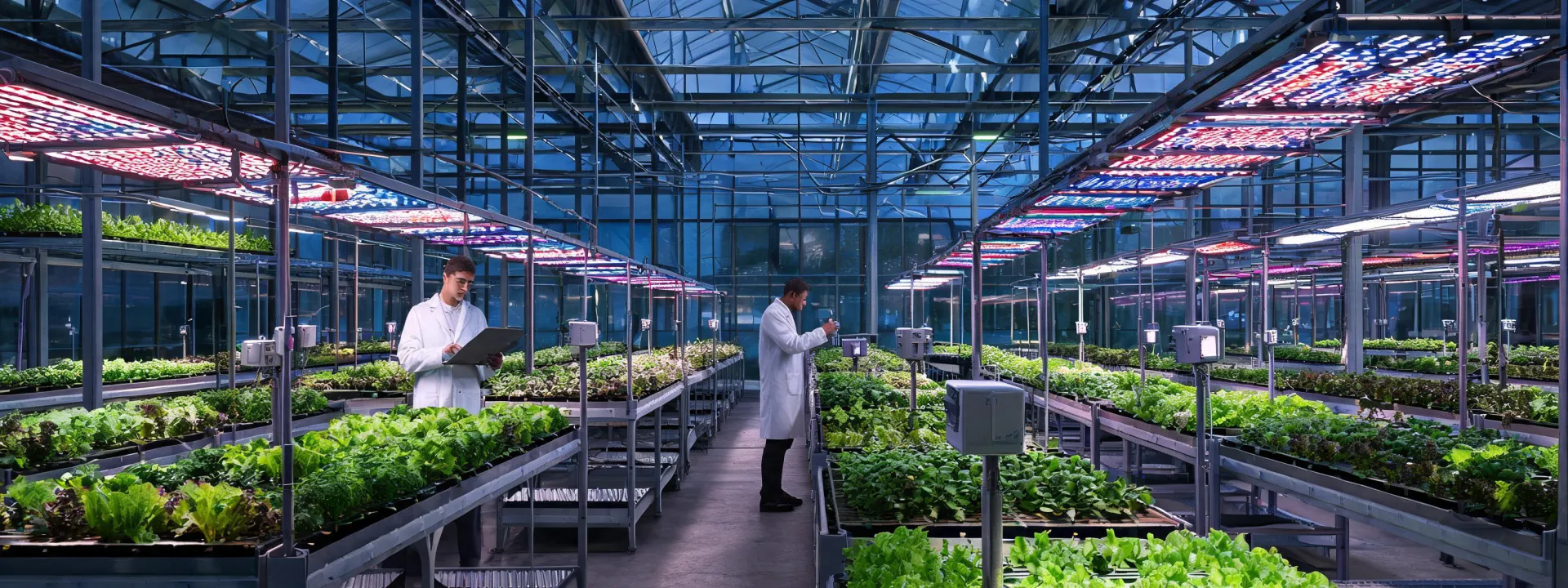
Valoya horticultural lighting research environment

About Valoya

Valoya connects light recipes to operating reality

Our innovation lens spans plant response, luminaire engineering, facility systems, control logic, measurement, and the people who run the crop.

A roadmap built around reproducibility

Crop question

Define the biological and production objective without assuming that more photons, a particular color, or a single spectrum will always improve the outcome.
Lighting hypothesis

State spectrum, PPFD, DLI, uniformity, photoperiod, geometry, and environmental conditions so the treatment can be compared and repeated.

Facility integration

Coordinate electrical capacity, drivers, zones, sensors, HVAC, irrigation, controls, data ownership, maintenance, and safe fallback behavior.

Measured operation

Commission with defined instruments and record the operating state. Crop results are interpreted alongside climate, nutrition, cultivar, density, and production practice.

Configured organizational milestones

1981

Lighting foundation

The supplied brand record begins its current timeline in 1981. This is treated as an internal credential and not expanded into unsupported historical claims.

45 years

Learning across lighting cycles

Experience supports a long view of sources, drivers, optics, controls, measurement, and operating needs while product-specific evidence remains configuration dependent.

45 markets

Regional context

Crop practices, grid conditions, climate, facility design, and regulatory pathways vary by region. UL, CE, and RoHS evidence must stay within its declared scope.

2,400+

Cross-functional scale

The configured workforce value signals capacity across product, agronomy, engineering, commercial, and support functions without implying universal availability for every inquiry.

Disciplines that must remain connected

GrowersPlant scientistsFacility engineersControls integratorsHVAC teamsElectrical contractors

Horticultural lighting rarely succeeds as an isolated purchase. Photon delivery, climate, irrigation, crop work, energy tariffs, maintenance, and data practices shape the operational result. Integrated solutions can simplify coordination, while modular components can improve serviceability; the right balance depends on the facility and ownership model.

Bring the crop question into the engineering conversation

Define what will be measured, under which conditions, and who will act on the result.

Connect with Valoya