Background
A grower needs consistent crop-plane photons across production bays with different daylight exposure.
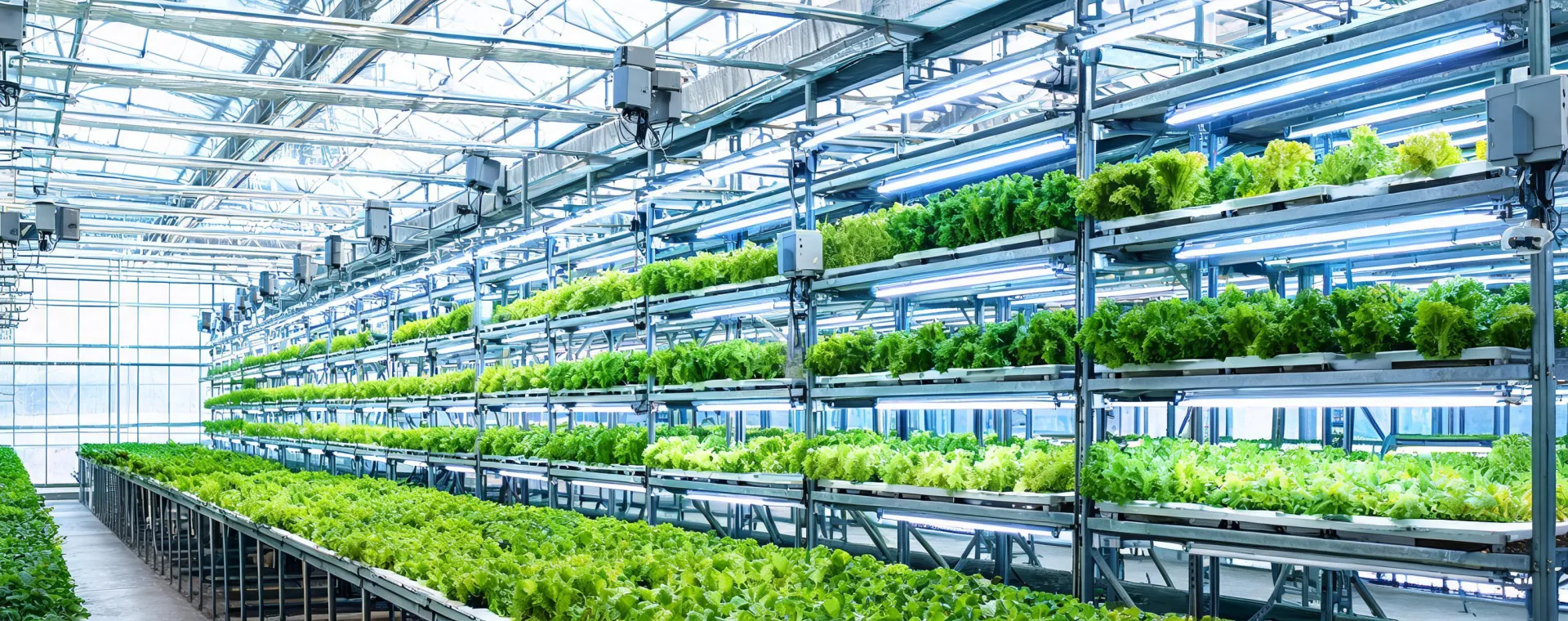
Growing environments
Connect photon delivery to canopy geometry, crop stage, daylight, climate, labor, and production rhythm.
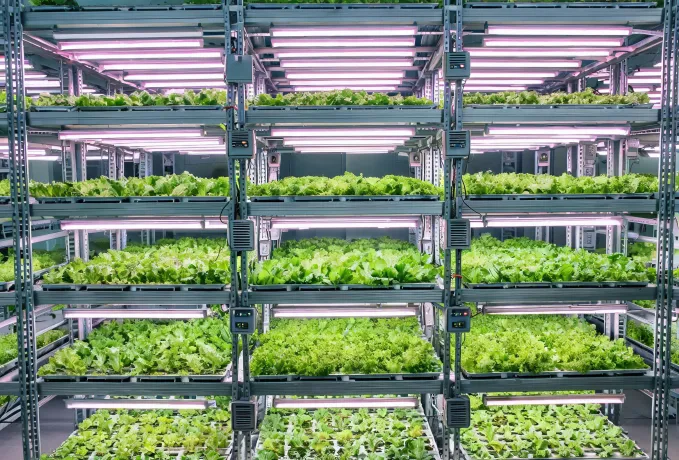
Low mounting distances and stacked layers make uniformity, fixture profile, electrical density, airflow, heat removal, sanitation, and service access central. Define PPFD at crop height, photoperiod, DLI, spectral treatment, crop spacing, edge losses, and dimming zones. Higher photon efficacy can reduce electrical input, but a facility decision also includes climate loads, crop response, capital cost, maintainability, and usable output at the canopy.
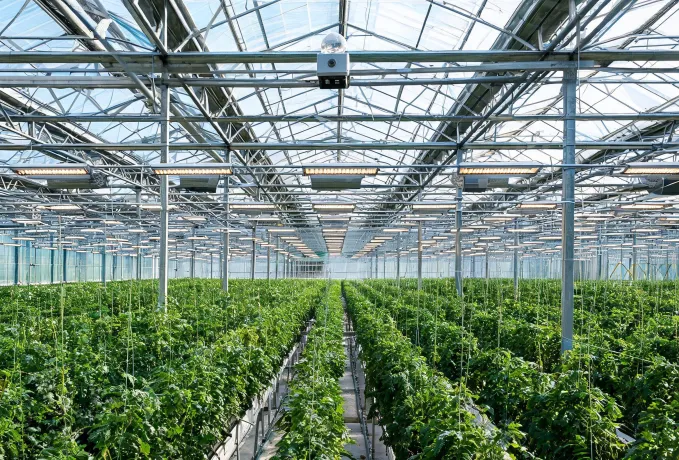
Supplemental lighting shares the crop plane with changing daylight. Control logic may use irradiance or PAR sensing, accumulated DLI, time windows, energy constraints, and climate state. Sensor placement, glazing, shading, seasonal sun angle, fixture obstruction, and crop height matter. A centralized strategy can simplify recipe governance; distributed zones can improve local flexibility and fault isolation.
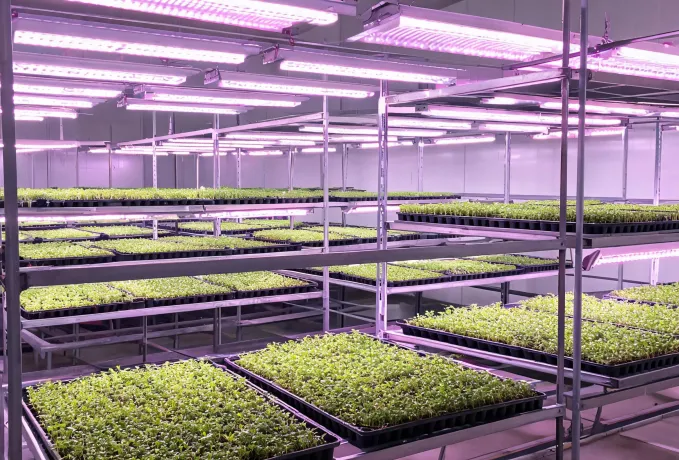
Seedlings, cuttings, and tissue-derived plants can be sensitive to excessive intensity, uneven drying, and abrupt schedule changes. Close-canopy layouts need fine spatial uniformity and clear measurement height. Document cultivar, stage, tray density, moisture practice, temperature, humidity, PPFD, photoperiod, and any transition plan before extrapolating a response.
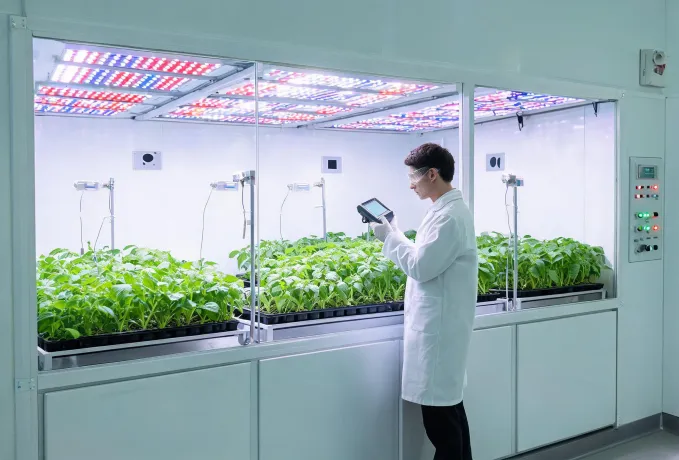
Experimental work prioritizes repeatability, treatment isolation, logging, calibration, randomization, and control of confounding factors. Spectral power distribution, PPFD, DLI, temperature, humidity, CO₂, irrigation, nutrition, cultivar, and sampling method all influence interpretation. A lighting recipe is evidence only within the documented conditions of the experiment.
A grower needs consistent crop-plane photons across production bays with different daylight exposure.
Map baseline daylight, define DLI bands, group zones, commission sensors, record fixture geometry, and validate representative canopies.
The control plan can target a repeatable light condition; yield and quality still depend on genetics, climate, nutrition, irrigation, pests, and production practice.
Send the production system, crop stage, geometry, climate, photon goals, controls, measurement plan, and schedule.