Crop-lighting services

Valoya planning from biological objective to commissioning

Translate crop stage, facility geometry, photon targets, climate limits, and operating schedules into a qualification and handover path.

Horticultural lighting planning

Four linked planning streams

01

Crop and stage definition

Record species, cultivar, propagation or production stage, morphology goal, quality criteria, photoperiod, target DLI, canopy height, plant density, and expected daylight. A single PPFD target without duration or crop context is incomplete.

02

Photon and spectrum model

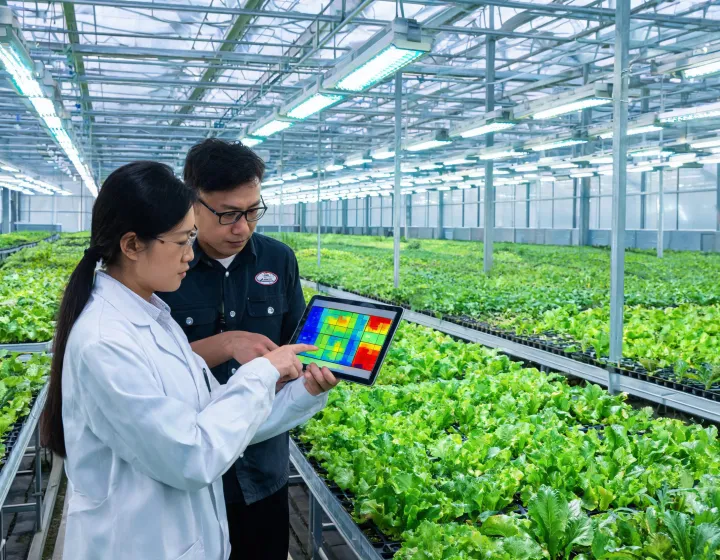
Map PPFD and uniformity at the crop plane using the actual rack or greenhouse geometry. Review spectral power distribution, photon efficacy, fixture spacing, mounting height, edge losses, reflectance, and the measurement grid.

03

Facility coordination

Lighting loads become heat that interacts with HVAC, dehumidification, irrigation, and climate control. Coordinate input voltage, driver behavior, dimming zones, sensors, schedules, peak load, emergency behavior, and maintenance access.

04

Commissioning evidence

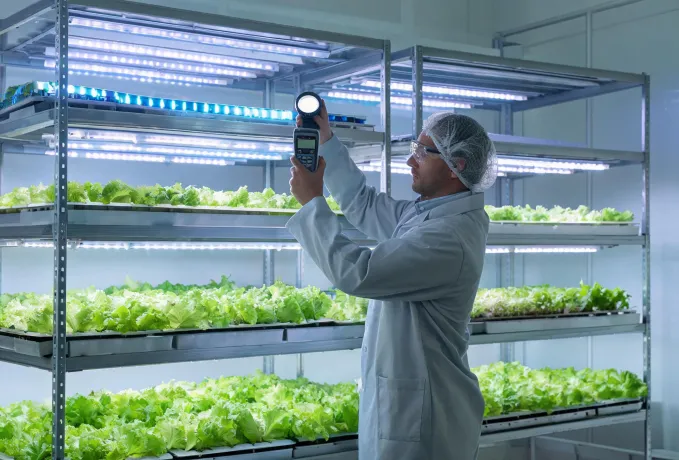
Define meter type, calibration status, measurement plane, grid spacing, climate state, dimming command, stabilization period, and acceptance tolerance. Record the final configuration so later recipe changes remain traceable.
Planning checkpoints in two facility types

Vertical farm lighting validation

Multi-layer leafy-green room

Background: stacked production limits fixture-to-canopy distance and cooling capacity. Process: map PPFD at crop height, compare uniformity, define photoperiod and DLI, coordinate dimming groups with HVAC and irrigation schedules, then validate a representative bay. Result: the team obtains a repeatable room recipe with documented geometry and measurement conditions; biological outcomes still require crop trials and operational discipline.

Greenhouse supplemental lighting

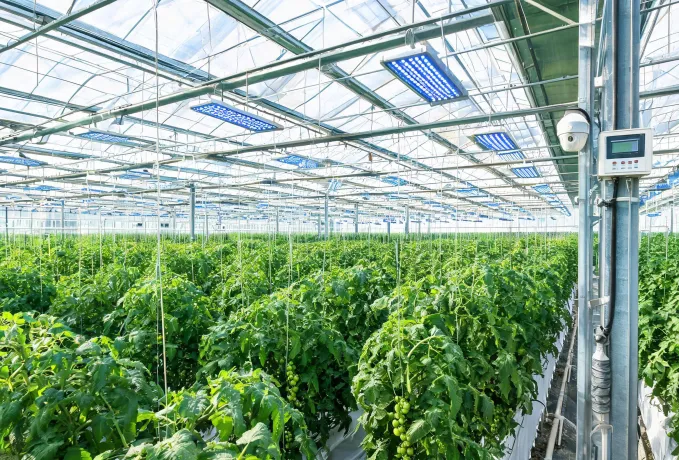
Daylight-responsive greenhouse

Background: seasonal solar variation changes daily photon delivery and heating load. Process: establish the outdoor-light input, canopy targets, sensor location, DLI accumulation rule, shading interaction, and fallback schedule. Result: supplemental lighting responds to a defined photon deficit instead of a fixed clock alone, while the grower retains manual and safe-state control.

µmol/m²/sPPFD at canopy
mol/m²/daydaily light integral
SPDspectral context
Loggedcommissioning state

Frame the crop trial and the facility test together

Send crop, stage, geometry, daylight conditions, photon targets, climate limits, control needs, trial plan, and decision date.