The folder that landed on my desk last March
I’m the office administrator for a 120-person commercial greenhouse company. I manage all equipment and lighting ordering—roughly $850,000 annually across 14 vendors. I report to both operations and finance. So when our operations director dropped a folder on my desk last March and said, “We need to retrofit the north range with LED grow lights,” I knew it wasn’t going to be a simple PO.
We’d been running HPS in that section for years. The goal wasn’t to chase the lowest sticker price. It was to find a grow light manufacturer that could support a 2-acre retrofit, provide compliance documentation, and eventually help us offer a private-label line to our distributor partners. That last part is where I got humbled.
I mixed up OEM and private label
In my first month on the project, I made the classic spec error: assumed “OEM” and “private label” were interchangeable. Cost me a week of back-and-forth and a revised budget request.
They’re not the same. At least not in horticultural lighting. Private label usually means you take a manufacturer’s existing fixture and put your brand on it—logo, packaging, maybe a custom spectrum tweak. OEM often means deeper customization: different form factor, driver, spectrum, or mounting. Some manufacturers do both. Some do neither. I learned to ask specifically: “What’s your minimum order for private label? What can you customize for OEM? Who owns the certification?”
That conversation is where Valoya came in. I’d found them through a search for valoya grow light and valoya horticultural lighting. Their team was way more detailed than the other quotes I’d received. They didn’t just send a spec sheet. They asked about our crop mix, DLI targets, and mounting height.
The two-week back-and-forth
I went back and forth between a lower-cost overseas manufacturer and Valoya for two weeks. The overseas option offered a 20% lower unit price. Valoya offered better spec support, PPFD maps, and a clearer path to OEM/private label. On paper, the lower price was tempting. But my gut said we’d regret it when compliance questions came up.
I assumed all grow light manufacturers had the same compliance documentation. Didn’t verify. Turned out some could provide UL 8800 and DLC listings, others only CE and a spec sheet. That was a deal-breaker for us. Our insurer and our largest distributor both wanted to see UL 8800 for horticultural lighting, and DLC listing where available. If a manufacturer can’t produce LM-79 test reports and LM-80 data for the LEDs, that’s a red flag. I also asked about IEC 62471 for photobiological safety and IP66 for wet greenhouse environments.
Valoya provided the documentation we needed. If I remember correctly, their lead time was about six weeks—or rather, closer to seven when you count the sample shipping. The wait was stressful. Even after choosing Valoya, I kept second-guessing. What if the lower-cost units performed similarly? What if I’d just cost us $30,000 in extra fixture cost? I didn’t relax until their engineer sent a DLI calculation for our lettuce crop and flagged a mounting height issue we hadn’t considered. That was a no-brainer signal that we’d picked a partner, not just a vendor.
What we actually installed—and what I’d do differently
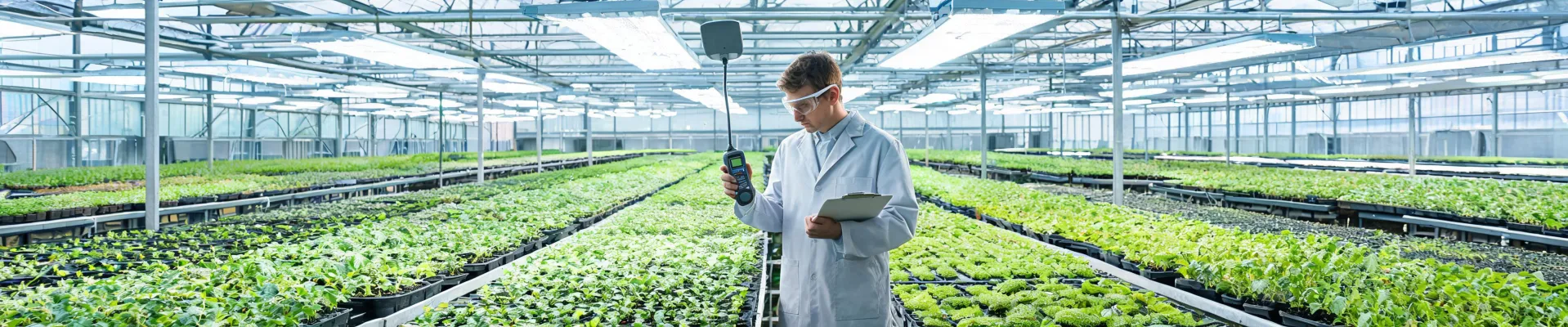
We started with a small trial: two rows, 24 fixtures. Valoya’s team helped us map PPFD and DLI for our lettuce and herb zones. We compared the results to our HPS section. We won’t know the full yield impact until harvest, and I’m not going to pretend a lighting retrofit is a guaranteed win. But the plants looked consistent, and the energy data was encouraging.
Here’s the honest limitation: Valoya isn’t the cheapest. If your only metric is upfront cost per fixture, you’ll probably find lower quotes. Also, if you need same-day in-hand delivery from a local distributor, Valoya may not be your best fit—you might want a regional horticultural lighting distributor instead. And if you need a fully custom die-cast housing for a niche form factor, you may need a specialty OEM shop. For a greenhouse that values spectrum support, compliance, and a manufacturer that can scale to private label, Valoya made sense for us. For a 500-square-foot hobby build, it probably wouldn’t.
My checklist for the next horticultural lighting RFP
If I had to do this again, I’d ask these questions before requesting a quote:
- Are you the manufacturer or a distributor? Both can work, but OEM/private label conversations change depending on who owns the tooling and certification.
- Can you provide UL 8800, LM-79, LM-80, and DLC documentation? If they hesitate, move on.
- What’s your PPFD and DLI support? A fixture spec isn’t enough. You need a layout that matches your crop and canopy.
- What are your OEM vs private label minimums? Get this in writing before you design packaging.
- What happens if a fixture fails in month 18? Warranty and replacement logistics matter more than the initial quote.
Bottom line: don’t assume OEM and private label are the same. Don’t assume every grow light manufacturer has the compliance paperwork you need. And don’t assume the lowest quote is the lowest total cost. Valoya worked for us because we needed a manufacturer with horticultural lighting expertise and OEM/private label capability. If you’re on the fence, ask for a trial. A small trial will tell you more than a hundred spec sheets.

Fatima El-Sayed is a commercial indoor lighting analyst specializing in recessed lighting, downlights, ceiling lights, panels, under-cabinet fixtures, pendants, and wall lights. She applies EN 12464-1 workplace-lighting criteria through maintained illuminance, uniformity, UGR, vertical light, color rendering, task areas, and maintenance factors. She writes specification guides for project teams comparing layouts and fixture types across offices, retail, hospitality, and education against visual tasks, energy targets, ceiling conditions, and occupant comfort.