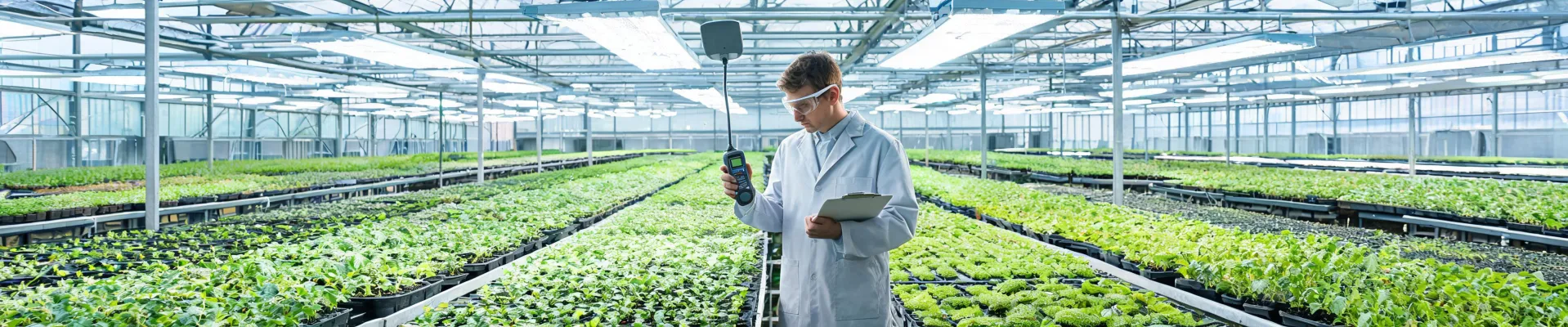
I review every lighting order before it reaches our customers or our own greenhouse operations. Around 200 orders a year, give or take. In 2024, I rejected about 12% of first deliveries because specs didn't match the quote. Not because the lights were visibly broken—but because the compliance paperwork was missing, or the IP rating was overstated, or the measured photometric data didn't match the datasheet.
The order that changed how I buy grow lights is still the first story I tell in vendor meetings. It's a story about an 1,800-fixture shipment, a $128,000 purchase, and what happens when "full compliance" turns out to be a PDF that doesn't exist.
How It Started
In early 2024, we were outfitting a 2.2-hectare greenhouse complex. The lighting spec called for roughly 1,800 LED fixtures. The budget was about $320,000. We got quotes from six suppliers: three full-service manufacturers and three brokers.
The brokers' quotes came in 15–20% lower. The finance team liked that. It's my job to find hidden problems, so I asked every supplier the same question:
"What's NOT included in this quote?"
Here's something vendors won't tell you: when a quote says "full compliance," it often means "we'll send you a PDF after you order." It doesn't mean the product was tested, certified, and documented. Real compliance costs money—testing, re-testing when components change, maintaining the technical files. If a quote is dramatically below market rate, ask what got cut to reach that number.
The brokers' answers were vague. Shipping was "estimated." Compliance documentation was "available on request." One broker said "full certifications" but couldn't name a single standard the fixtures met.
The manufacturers, by contrast, sent actual documents. Certificates. Test reports. Catalogs with part numbers. It took me a few years to understand what that contrast meant: suppliers who can produce compliance documentation on demand are usually the same suppliers who build products to a spec in the first place. The paperwork is not the product—but it's a reliable signal of how the company operates.
Anyway, we went with the cheapest broker. The project lead argued that "they all come from the same factories anyway," and I didn't push hard enough. I had a bad feeling, but I couldn't quantify it.
Three weeks after the fixtures arrived, I could.
The Turning Point
The batch failed inspection on three fronts.
The obvious one was the CE marking. Our region requires CE for commercial electrical installations. The fixtures had CE stickers—but no declaration of conformity, no technical file, no evidence of assessment. It would pass customs but fail a real compliance audit.
The second issue was the IP rating. The spec sheet said IP67 (protected against temporary immersion). The fixtures were actually IP65 (protected against water jets, not immersion). In a commercial greenhouse with overhead irrigation, that's not a minor detail. The drivers weren't sealed for our moisture loads.
People think IP ratings are just marketing labels. Actually, they're the result of specific enclosure design decisions—gaskets, potting compound, vent placement. If a manufacturer overstates an IP rating, what else did they overstate?
The third problem was the photometric data. We measured PPF on a sample of 20 fixtures: readings came in about 9% lower than the datasheet claimed. That might sound minor, but on 1,800 fixtures it means you're not hitting your DLI targets. Crop growth slows. The ROI model falls apart. A 9% shortfall is the difference between a project that works and a project that doesn't.
We rejected the batch. About $128,000 worth of fixtures sat in a shipping container for six weeks while the broker negotiated with the factory.
Let me rephrase that: we rejected most of them. About 1,400 went back. We kept roughly 400 for a low-light propagation area where the shortfall was "close enough." I still regret that compromise. It's the kind of decision that looks pragmatic in the moment and expensive later.
The redo cost us $22,000 in labor, testing, and expedited shipping. That's the number I lead with in conversations with our procurement team. Cheap didn't mean cheap. It meant expensive, with extra steps.
The Rebuild
We went back to the manufacturers we'd originally evaluated. This time, I wasn't comparing price. I was comparing proof.
Valoya came in not as the cheapest, but as the most transparent. Their quote had line items for everything: fixture cost, packaging, freight terms, compliance documentation, spectrum data, warranty terms. Nothing was "estimated." Their greenhouse lighting catalog was structured the way I'd want any technical product line structured—every model with a clear spec sheet, dimming options, and spectrum choices documented.
But the thing that actually convinced me wasn't the catalog. It was that their engineers asked about our crop mix, greenhouse geometry, and daily light integral targets before sending a configuration. Nobody else did that. They were treating horticultural lighting as a system, not a box of LEDs.
We ordered 1,650 Valoya fixtures—slightly fewer than the original spec because the measured PPF matched the datasheet, so we could spec to real numbers instead of inflated ones. The quote was about 4% higher than the cheapest broker price. But it included everything: documented compliance, verifiable photometric data, and warranty terms that named exactly what happens if a batch fails.
The fixtures passed incoming inspection on the first try. That's never happened with a first delivery from a new supplier in my time here. I actually double-checked the test equipment because it seemed too clean.
What I Learned
It took me 4 years and about 380 order reviews to understand that the cheapest quote is almost never the cheapest order. The cost of a grow light includes the cost of proving it works. If that proof isn't in the quote, it's hidden somewhere you'll discover later.
A few things I now do every time:
- Ask "what's NOT included" before asking "what's the price?" The supplier who lists all fees upfront—even if the total looks higher—usually costs less in the end.
- Ask for certificate numbers, not certificate names. A CE sticker is not a declaration of conformity. The declaration should reference specific directives and standards. Ask to see it before you order, not after.
- Verify photometric data against third-party sources. For horticultural fixtures, DLC has published performance requirements and maintains a qualified products list. DLC's horticultural lighting requirements were updated in 2024—check designlights.org for the current version, as they continue to evolve into 2025.
- Know your region's compliance requirements before shortlisting vendors. Greenhouse lighting compliance requirements vary by market. In the EU, CE marking under the Low Voltage Directive and EMC Directive is the baseline. In North America, UL/ETL listing and DLC qualification matter. These regulations and standards change—verify current requirements at official sources, and make sure your supplier can name the specific ones they meet.
- Get warranty terms in writing, including what happens on failure. Does the supplier cover return shipping? Cross-ship replacements? Or do you wait for their "review process" while your crop misses light hours?
There's one more thing. At a trade association meeting this past fall, a grower asked if the "transparency premium" is worth it. Here's what I told him: when a supplier itemizes everything, I'm not paying extra for paperwork. I'm buying information. Information isn't the cost—it's the thing that prevents the next $22,000 redo.
So if you're sourcing bulk grow lights—whether it's a commercial greenhouse or a research facility—ask the annoying questions first. If a supplier gets defensive, that's your answer. The ones who welcome inspection are the ones worth trusting.
(And for what it's worth: Valoya's horticultural lighting team sent us a revised configuration when our crop plan changed this spring, without upselling. That's the behavior of a partner, not a vendor. It's why they're still our primary supplier.)
Clara Whitmore is a lighting photometry and LED source analyst specializing in bulbs, tubes, strips, panels, and integrated luminaires. She interprets IES LM-79 measurements and TM-30 color rendition data through luminous flux, efficacy, intensity distribution, CCT, chromaticity, fidelity, and gamut metrics. She writes evidence-led comparisons for specifiers selecting source formats and luminaires for commercial interiors, industrial spaces, or horticultural systems where measured optical and color performance matter.